Share the Art of your Discovery
Research Revealed is a photo and multimedia contest for University of Oregon undergraduates involved in research and creative scholarship.
Research Revealed is sponsored by the Office of the Vice President for Research and Innovation and the Undergraduate Research Opportunity Program.
Contest Details
Important Dates
- Contest opens February, 16, 2026.
- Contest closes March, 13, 2026.
- Entrants will be notified by April 3, 2026.
- Award winning photos will be displayed at the Week of Research and Innovation on April 7, 2026 and the Undergraduate Research Symposium on May 7, 2026.
Eligibility
The contest is open to all currently enrolled undergraduates at the University of Oregon.
One entry will be accepted per person.
Evaluation Criteria
Submissions may depict the subject of your research or capture the process of doing research. Entries will be judged on the following criteria:
- Aesthetic appeal.
- Creativity, composition, and visual impact.
- Conciseness and clarity of the written description of the image.
Prizes
Prizes will be awarded in both the photo and multimedia categories.
- First place: $125
- Second place: $100
- One $50 people's choice winner will be selected during the Week of Research and Innovation.
University fiscal policy requires that monetary awards in excess of $50 are reported as taxable income to the recipient.
Submission Guidelines
- Size: Files must be no larger than 100 MB
- Videos larger than this should be shared via a link to the video
- Accepted formats
- Image: .jpg, .png., or .tif
- Minimum resolution: 300 dpi, vertical or horizontal orientations are accepted
- Videos: .avi, .mp4, .mov
- Audio: .mp3, .aif, .iff
- Image: .jpg, .png., or .tif
- Description of image or multimedia product (maximum 150 words): If the product features someone conducting research, be sure to describe what the person featured is doing. The description should be written so that someone who is not a researcher in your field can understand what is occurring in the photo, video, etc. The description is weighed heavily in determining winning entries.
- If an individual appears in the image or video, a model release form must be completed for that person.
- Images or videos containing human research subjects MUST have PI approval before submission.
- No imagery of vertebrate research animals will be accepted.
- Photos may be edited to a reasonable degree (basic editing of color, contrast, brightness, etc.). Drastic alterations (e.g., addition or removal of significant portions of the photo using editing software, etc.) are generally discouraged.
- No AI-generated images will be accepted.
- Submissions must be original, unpublished work and must be created by the student submitting the image. See this UO Libraries page on copyright.
- By submitting an image to this contest, the students release usage rights to the Office of the Vice President for Research and Innovation.
Submission Portal
Use the submission form to complete your entry by March 13, 2026 at 11:59 p.m.
Submit Your Photo or Multimedia
Past Winners
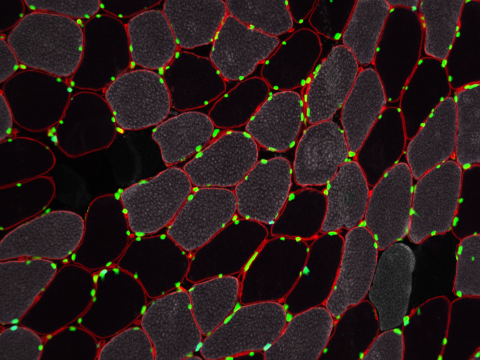
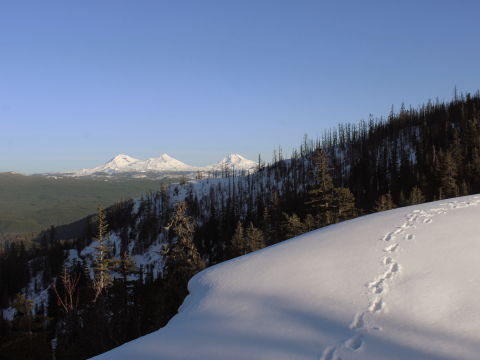
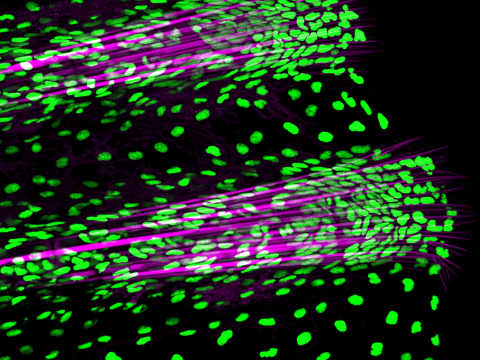
These three winners received monetary prizes and were featured at last year's Undergraduate Research Symposium. In 2026, we will expand the contest to include separate photo and multimedia categories.