
Neurodiversity is not just a feature of brains under study—it is also a source of innovation in the scientists who conduct forward-facing research. Just as traditional modes of experimental design and analysis can exclude rich variation within neural data, educational institutions can exclude the very minds poised to make the biggest impact. There is no “normal” or “wild type” brain, only an eclectic and overlapping spectrum of brains that experience and solve problems differently.
The Neurodiversity Innovation Center for Excellence in Neuroscience (NICE in Neuro) is revolutionizing the practice of neuroscience by championing diversity in research and scientists. Founded by UO graduate students Lila Kaye and Leah Blankenship and professor Matt Smear, the program challenges outdated experimental models and supports collaboration and communication to increase the retention of neurodiverse students.
Neurodiversity means everybody: Every researcher brings unique insight to the collective work of discovery. The NICE in Neuro training mission employs universal design to create an environment that supports all neurotypes. Instead of viewing accommodations as extra work, they have realized that small changes—like including subtitles in online seminars—benefit many, even those with perfect hearing. This is just one example of how listening to diverse needs has historically driven innovations which benefit society as a whole.
Under the NICE in Neuro ethos, graduate students are working with their mentors to cultivate lab environments that support neurodiverse cognition. Inspired by recent discoveries from autistic communication styles, NICE in Neuro co-founder Leah Blankenship helped develop a framework to guide the relationship between mentors and mentees. Her model decentralizes the mentor and the mentee. Instead of focusing on accommodating individual needs, her framework exposes unspoken assumptions that impede collaboration and outlines efficient communication styles to accelerate progress. This model creates a focused space for criticism and direct communication which prioritize research goals.
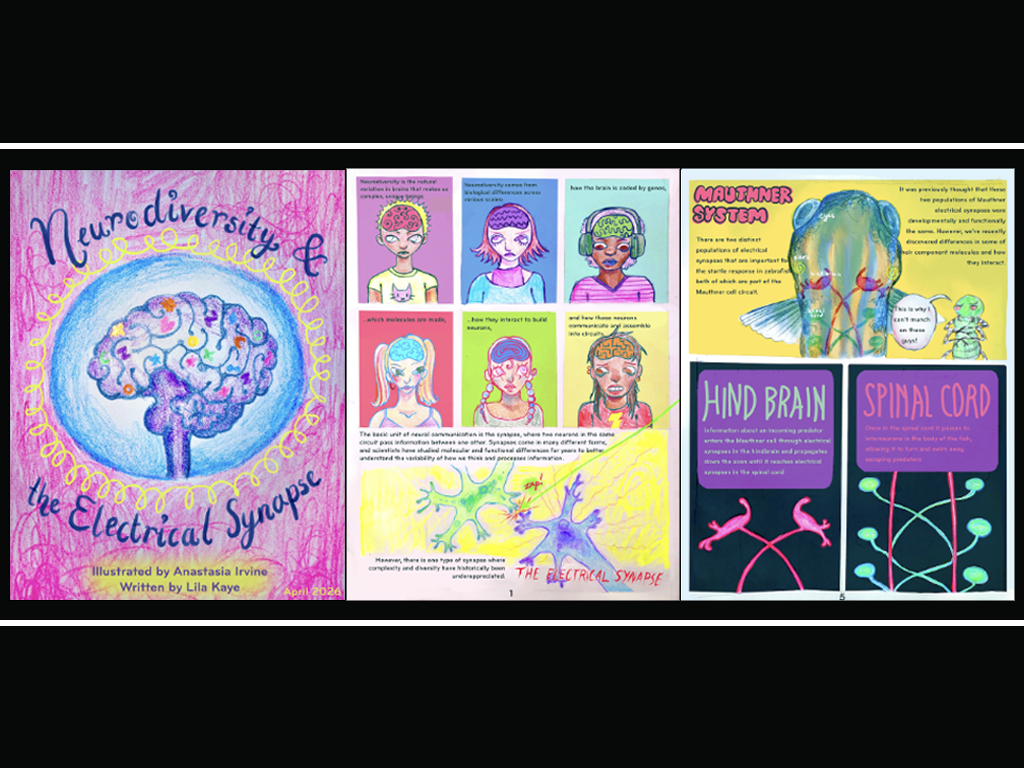
NICE in Neuro co-founder Lila Kaye has taken a more artistic approach to connect neural circuit diversity with neurodiversity among scientists. Kaye worked with artist Anastasia Irvine to create a comic that explores the neurodiversity of the electrical synapse. The piece shows how the same gene can yield different phenotypes at different synapses, highlighting how biological diversity is built into the circuit.
Blankenship, Kaye, and Smear all self-identify as neurodivergent and are applying their unique views on research and communication to affect progress in the institutions that support their scholarship. The NICE in Neuro team is creating internal change to capitalize on the diverse but complementary insight we get from varied perception.